
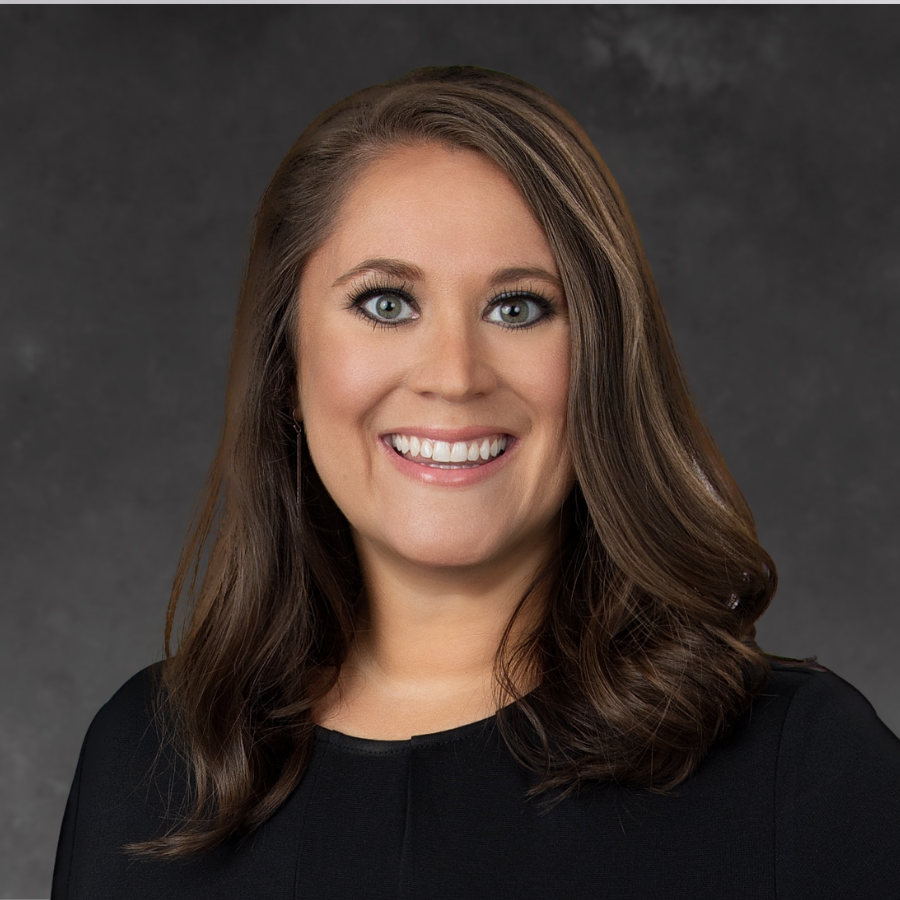
 Ginnie Baker

Explore these year-end charitable giving strategies — from donating appreciated securities and making Qualified Charitable Distributions (QCDs) from IRAs to leveraging Donor-Advised Funds (DAFs) — to maximize your tax benefits and stay on top of Required Minimum Distributions (RMDs) before the November 14 deadline.
With fall in full swing and the year-end quickly approaching, it’s the perfect season to reflect on the causes and organizations that matter most to you. Thoughtful, timely giving not only helps the charities you care about continue their important work—it can also provide meaningful tax advantages for you and your family. We’re here to guide you through some lesser-known strategies that can help you make the most of your generosity this season.
The deadline for processing charitable gifts using any of the strategies below, is Friday, November 14th, so please contact us with all gifting requests prior to the 14th.
1. Gifting Appreciated Securities
Rather than selling appreciated securities and donating the after-tax proceeds, consider donating the securities directly. You’ll generally avoid paying capital gains tax on the appreciation and may be able to deduct the full fair market value of the donation (subject to IRS limits).
2. Charitable IRA Distributions
Qualified Charitable Distributions (“QCDs”) are distributions made from an Individual Retirement Account (“IRA”) directly to a qualified charity. QCDs are permitted for individuals age 70½ and older up to $100,000 in the calendar year 2025.

When processing a QCD, the corresponding 1099 from your custodian will NOT list the distribution as a charitable contribution, thus it is incumbent upon you to notify your CPA that the distribution was a QCD. Note, QCDs cannot be made to a Donor-Advised Fund.
3. Donor-Advised Fund
A Donor-Advised Fund ("DAF") is a charitable giving account that is set up with your custodian to manage your charitable donations. You receive an immediate tax deduction when making a charitable donation to the DAF and you direct the custodian when to disburse funds (grants) to the qualified charities of your choice. Generally, donors are required to make at least one grant every two years from their DAF.
This strategy works well when an individual has appreciated securities (stocks or mutual funds) that he or she has owned for at least a year and would now like to donate. Once donated to the DAF, the assets can remain there until you provide further instructions on when the funds are to be disbursed to your charity of choice. This is particularly useful when an individual has higher-than-usual income, such as from the sale of a business or a large bonus. The individual can front-load several years’ worth of charitable gifting in one year (DAF gift) to receive a larger tax deduction that particular year. Then, the individual can direct smaller amounts be made from the DAF (grants) to qualified charities over the ensuing years.
Ask your Wealth Manager if you are looking for ways to make a difference and minimize your tax obligation before year-end.
Required Minimum Distributions ("RMDs")
RMDs are required for everyone with IRAs and 401(k)-type accounts (but not defined benefit plans) for clients aged 73 or older; however, special rules apply to inherited IRAs.
- Inherited IRAs before 2020: annual distributions are required regardless of age.
- Inherited IRAs in 2020 or later: annual distributions are required, and the account must be fully distributed by the end of year 10 (unless you’re a spousal beneficiary or meet another exception).
Ask your advisor about your plan for distributing your inherited IRA and if you should be taking an RMD this year. Also, if you have any IRAs not managed by Beaird Harris, including Inherited IRAs, you are responsible for fulfilling the IRS RMD requirement from those accounts.
Please Note: We are in the process of reaching out to all individuals who require an RMD and will be in touch soon if we haven't contacted you already; however, you are welcome to reach out to us directly to process your RMDs now if you would like.
_________________
Frequently Asked Questions
1. What is the deadline to process my year-end charitable gifts?
All charitable gifts using these strategies must be submitted to us by Friday, November 14th to ensure we have time to process them before year-end.
2. Why is donating appreciated securities better than giving cash?
When you donate appreciated securities directly, you usually avoid paying capital gains tax on the growth and can deduct the full fair market value of the donation (within IRS limits). This means more of your money goes to the charity you care about.
3. Who can make a Qualified Charitable Distribution (QCD)?
If you’re age 70½ or older, you can give up to $108,000 per year directly from your IRA to a qualified charity. This distribution won’t count as taxable income, but you’ll need to tell your CPA it was a QCD since it won’t be labeled as such on your 1099-R form.
4. Can a QCD be made to my Donor-Advised Fund?
No. By law, QCDs must go directly to a qualified public charity. They cannot be made to Donor-Advised Funds.
5. What is a Donor-Advised Fund (DAF) and how does it work?
A DAF is like a charitable giving account you set up with your custodian. You get an immediate tax deduction when you contribute to it, and then you decide over time which charities receive grants. It’s especially useful if you have appreciated securities or unusually high income in a single year.
6. Who is required to take Required Minimum Distributions (RMDs)?
Generally, if you’re age 73 or older you must take an RMD from your IRA or 401(k)-type accounts each year. Inherited IRAs have their own special rules — some require annual withdrawals, others must be emptied within 10 years.
7. What should I do next if I’m interested in these strategies?
Reach out to your Wealth Manager. We can help you determine which strategy fits your situation, process your charitable gifts before the deadline, and ensure your RMDs are on track.